
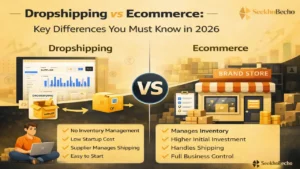
Dropshipping vs. Ecommerce: Which Pays More?
The global e-commerce industry continues to grow rapidly, offering entrepreneurs unprecedented opportunities to build profitable online businesses. Among the most popular business models are dropshipping and traditional e-commerce. While both operate within the online retail ecosystem, they differ significantly in structure, risk, profit margins, scalability, and long-term sustainability.
One of the most frequently asked questions by aspiring entrepreneurs is: which pays more—dropshipping or traditional e-commerce? The answer depends on multiple factors, including business strategy, capital availability, branding approach, marketing efficiency, and operational management.
This comprehensive guide explores the differences between dropshipping and e-commerce in depth, analyzing profitability, costs, scalability, risks, control, long-term potential, and income sustainability. By the end, you will have a clear understanding of which model aligns best with your financial goals and entrepreneurial vision.
Understanding Dropshipping
Dropshipping is a retail fulfillment method in which the seller does not keep products in stock. Instead, when a customer places an order, the seller purchases the product from a third-party supplier who ships it directly to the customer.
How Dropshipping Works
- You create an online store.
- You list products from suppliers.
- A customer places an order.
- You forward the order to the supplier.
- The supplier ships directly to the customer.
The seller earns the difference between the retail price and the supplier’s cost.
Understanding Traditional E-commerce
Traditional e-commerce involves purchasing inventory upfront, storing products (either personally or in a warehouse), and handling shipping logistics directly or through fulfillment services.
How Traditional E-commerce Works
- You purchase inventory in bulk.
- Store products in a warehouse or fulfillment center.
- Customers place orders.
- You ship products directly or via third-party logistics.
The business owns inventory and controls the entire supply chain process.
Startup Costs Comparison
One of the most significant differences between dropshipping and traditional e-commerce is startup capital.
Dropshipping Startup Costs
Dropshipping requires minimal upfront investment because you do not purchase inventory in advance.
Typical expenses include:
- Website setup
- Domain and hosting
- Marketing and advertising
- Subscription fees for platforms or tools
Because inventory is not pre-purchased, financial risk is lower.
Traditional E-commerce Startup Costs
Traditional e-commerce requires higher initial investment.
Expenses include:
- Inventory purchase
- Warehousing or storage
- Packaging materials
- Shipping logistics
- Website and marketing
Bulk purchasing may require substantial capital, especially for high-demand products.
Conclusion on Startup Costs
Dropshipping is more accessible for beginners with limited capital. Traditional e-commerce requires financial commitment but offers greater control.
Profit Margins: Which Model Earns More?
Profit margin is a critical factor when determining which business pays more.
Dropshipping Profit Margins
Dropshipping typically operates on lower margins because:
- Suppliers set wholesale prices
- Competition is high
- Many sellers offer identical products
Average dropshipping profit margins range between 10% to 30%.
Higher margins are possible with niche products and strong branding.
Traditional E-commerce Profit Margins
Traditional e-commerce generally offers higher profit margins because:
- Bulk purchasing reduces per-unit cost
- Branding allows premium pricing
- Private labeling increases perceived value
Average margins range between 25% to 60%, depending on product type and operational efficiency.
Conclusion on Profitability
Traditional e-commerce usually pays more per unit sold. However, total profit depends on sales volume and operational expenses.
Revenue Potential
Revenue depends on marketing effectiveness, product demand, and pricing strategy.
Dropshipping Revenue Potential
Dropshipping allows rapid scaling because:
- No inventory limits
- Easy product testing
- Low overhead
However, intense competition may limit long-term profitability.
Traditional E-commerce Revenue Potential
Owning inventory allows:
- Brand building
- Higher customer loyalty
- Repeat purchases
- Premium pricing
Established e-commerce brands often generate significantly higher annual revenue compared to most dropshipping stores.
Verdict on Revenue
While dropshipping can generate fast revenue, traditional e-commerce typically produces higher long-term income.
Risk Comparison
Dropshipping Risks
- Supplier reliability issues
- Shipping delays
- Quality control challenges
- Limited branding opportunities
- Account bans on advertising platforms
Because you do not control inventory, supplier problems directly impact your reputation.
Traditional E-commerce Risks
- Unsold inventory
- Storage costs
- Capital tied up in stock
- Logistics management
Financial risk is higher due to upfront investment.
Risk Summary
Dropshipping has lower financial risk but higher operational uncertainty. Traditional e-commerce has higher financial exposure but more control.
Control and Branding
Branding plays a major role in profitability.
Dropshipping Branding Limitations
Most dropshippers sell generic products. This makes differentiation difficult.
Customers often compare prices across multiple stores.
Brand loyalty is harder to build without unique packaging or product customization.
Traditional E-commerce Branding Advantages
Owning inventory allows:
- Custom packaging
- Private labeling
- Product improvements
- Consistent customer experience
Strong branding increases lifetime customer value and allows higher pricing.
Branding Conclusion
Traditional e-commerce offers stronger long-term brand-building potential.
Scalability
Scalability determines how quickly a business can grow.
Dropshipping Scalability
Dropshipping scales quickly because:
- No need to manage stock
- Easy to test multiple products
- Automation tools are available
However, reliance on suppliers can limit scalability during high demand.
Traditional E-commerce Scalability
Scaling requires:
- Inventory planning
- Supply chain management
- Logistics coordination
Though more complex, successful scaling leads to stronger brand authority and larger profits.
Customer Experience and Satisfaction
Customer satisfaction impacts long-term income.
Dropshipping Challenges
- Long shipping times
- Inconsistent quality
- Limited packaging customization
Negative experiences reduce repeat purchases.
Traditional E-commerce Benefits
- Faster shipping
- Quality control
- Personalized packaging
Better experience increases repeat business and referrals.
Marketing Considerations
Both models rely heavily on marketing.
Dropshipping Marketing
Often dependent on paid ads.
High competition drives up advertising costs.
Product testing requires continuous ad spending.
Traditional E-commerce Marketing
Brand-based marketing builds organic traffic over time.
Content marketing, SEO, and email marketing reduce reliance on paid ads.
Long-Term Sustainability
Dropshipping Sustainability
Many dropshipping stores operate as short-term ventures focused on trending products.
Long-term sustainability requires:
- Strong niche focus
- Brand building
- Supplier reliability
Traditional E-commerce Sustainability
Traditional e-commerce supports:
- Asset creation
- Brand equity
- Business valuation growth
Established brands can be sold at high multiples.
Which Pays More in the Short Term?
Dropshipping often pays more in the short term because:
- Quick setup
- Low financial barrier
- Fast product testing
Entrepreneurs can generate income within weeks if marketing is effective.
Which Pays More in the Long Term?
Traditional e-commerce typically pays more long term due to:
- Higher margins
- Brand loyalty
- Repeat customers
- Asset valuation
Sustainable businesses generate consistent profits year after year.
Hybrid Model: Combining Both
Some entrepreneurs begin with dropshipping to test products.
Once winning products are identified, they:
- Purchase inventory in bulk
- Create private labels
- Build brand identity
This hybrid approach combines low-risk testing with high-profit scaling.
Real-World Income Scenarios
Dropshipping Example
- Product cost: $15
- Selling price: $35
- Gross profit: $20
- Advertising cost per sale: $12
- Net profit: $8
Profit margin: approximately 23%
Traditional E-commerce Example
- Product cost (bulk): $10
- Selling price: $40
- Gross profit: $30
- Marketing cost per sale: $10
- Net profit: $20
Profit margin: approximately 50%
Over time, higher margins significantly impact total earnings.
Workload Comparison
Dropshipping Workload
- Product research
- Ad optimization
- Supplier communication
- Customer support
Less inventory management but high marketing focus.
Traditional E-commerce Workload
- Inventory planning
- Fulfillment management
- Branding
- Marketing
- Customer service
More operational responsibility but greater control.
Exit Value and Business Sale Potential
Businesses are often valued based on profit and stability.
Dropshipping stores typically sell for lower multiples due to volatility.
Branded e-commerce stores can command higher valuations because they are considered long-term assets.
Which Is Better for Beginners?
Dropshipping is better for:
- Low capital entrepreneurs
- Beginners testing online retail
- Those comfortable with marketing
Traditional e-commerce is better for:
- Long-term business builders
- Brand-focused entrepreneurs
- Investors seeking higher margins
Key Decision Factors
When deciding between dropshipping and traditional e-commerce, consider:
- Available capital
- Risk tolerance
- Long-term vision
- Operational capacity
- Branding ambition
Your goals determine the best model.
Final Verdict: Which Pays More?
In most cases, traditional e-commerce pays more in the long term due to higher margins, stronger branding, repeat customers, and asset growth.
However, dropshipping can generate faster short-term income with lower upfront risk.
If the goal is quick cash flow with minimal investment, dropshipping may be suitable.
If the goal is building a sustainable, high-value brand with long-term profitability, traditional e-commerce is generally more rewarding.
The most strategic approach may involve starting with dropshipping to test product demand, then transitioning into branded e-commerce once profitable products are identified.
Ultimately, profitability depends less on the model and more on execution, marketing skill, customer experience, and strategic planning.
Choosing the right approach requires aligning your financial resources, skills, and business objectives with the characteristics of each model. Both offer income potential, but traditional e-commerce typically delivers greater long-term earning power and asset value.
